

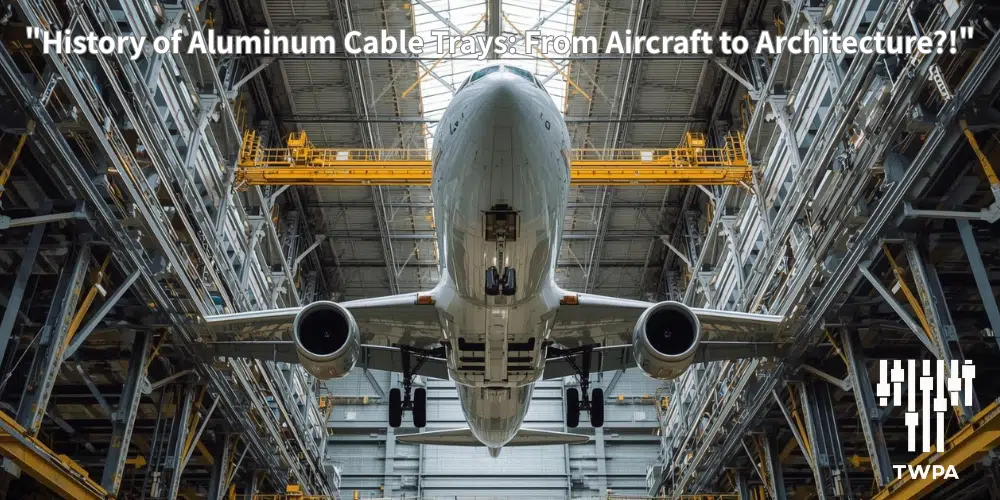
he early origins of aluminum cable trays in industrial applications can be traced back to aircraft design and manufacturing in the early 20th century. During this era of rapid aviation development, innovative materials were required to enhance the functionality and performance of aircraft. In early aircraft design, aluminum cable trays were primarily used to support and protect electrical cables, control systems, and other critical components. Configured within the fuselage, these trays ensured that cables and conduits remained undamaged and shielded from external environmental factors—a significant innovation that improved aircraft reliability and operability.
Aluminum cable trays became a cornerstone of early aviation due to several key characteristics:
-
Lightweight: As a relatively lightweight metal, aluminum is crucial for aircraft design. Minimizing weight reduces fuel consumption, enhances flight performance, and allows aircraft to adapt to diverse flight conditions. The lightweight nature of aluminum cable trays made them the ideal choice for support structures.
-
Adjustability: Aluminum cable trays offer high adjustability, meaning they can be customized according to specific aircraft designs and requirements. This flexibility allowed engineers to optimize configurations for different models and purposes.
-
Strength: Despite being lightweight, aluminum cable trays possess exceptional strength. They can withstand various stresses during flight operations, including acceleration, vibration, and airflow pressure, ensuring structural stability and safety compliance.
-
Corrosion Resistance: Aluminum's superior corrosion resistance makes these trays suitable for humid or harsh environments.
Consequently, the early application of aluminum cable trays played a pivotal role in the aviation industry, providing critical support for aircraft performance and laying the foundation for modern aerospace engineering.
For more information about aluminum cable tray products, feel free to join the JNS (Jeng Shuen) official LINE account: @twn5746w. JNS appreciates your support.
Modern Applications of Aluminum Cable Trays
In contemporary society, aluminum cable trays are widely utilized across various sectors. Their lightweight, durable, and versatile nature makes them the preferred choice for numerous industries:
-
Construction and Architecture: Used in skyscrapers, residential buildings, bridges, and warehouses to manage cabling, lighting systems, and communication equipment while maintaining a clean aesthetic.
-
Power and Energy: Crucial for supporting cables and equipment in power facilities, solar farms, and wind farms due to their lightweight and anti-corrosive properties.
-
Industrial Automation: Applied to manage cabling for robotics, automated equipment, and production lines, ensuring smooth factory operations and reducing the risk of cable failure.
-
Transportation: Widely used in subway systems, railway stations, and airports for lighting, signaling, and communication infrastructure.
-
Food and Pharmaceuticals: Used to support cables and piping on production lines. Their ease of cleaning ensures they do not compromise product quality or hygiene standards.
-
Data Centers: Essential for managing data transmission and power supply, ensuring high-efficiency operation of critical server equipment.
-
Aerospace and Space Tech: Utilized in satellites, space stations, and solar arrays to support complex cabling and instrumentation.
In summary, aluminum cable trays are vital for maintaining organized equipment, managing complex wiring, and ensuring facility efficiency. Their lightweight, corrosion-resistant, and adjustable nature makes them the premier solution for many industries.
TWPA offers high-quality aluminum cable trunking, cable trays, and related accessories. We welcome you to contact us directly for inquiries.